Ween - Quebec
Melodies, mindfucks, misery and joy. Their greatest album? Maybe, just maybe...

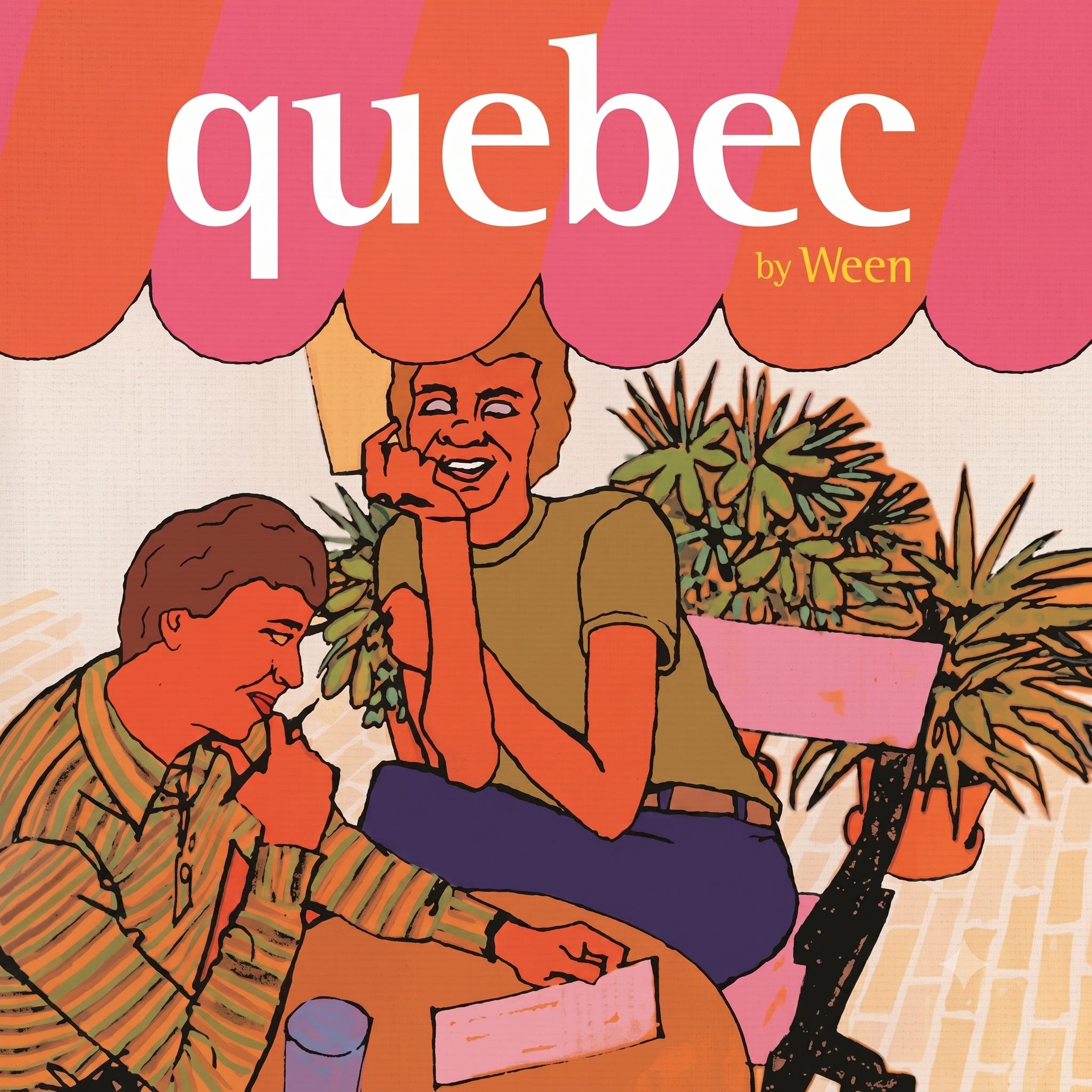
Ween are a band who elicit one of two reactions when mentioned: either a blank stare, or a knowing broad smile accompanying a keen, conspiratorial nod, as if you are both in on a brilliant secret.
Quebec is one of the band's later albums, and arguably their most overlooked in some senses. In terms of the band's career arc, one might argue that by the time this record was released, their profile was on the downward slope. Having broken through with the MTV favourite "Push Th' Little Daisies" (from their 3rd proper album, Pure Guava) they really staked their spot in alternative culture with the album Chocolate and Cheese, and its two singles, Voodoo Lady and Freedom of ‘76, the latter sporting a video directed by Spike Jonze.
Quebec arrived four albums later, and by this point, even I - as a fan who had discovered them after hearing God Ween Satan, their first proper LP, on Shimmy Disc - was starting to wane and honestly, by the time Quebec landed, my passions had drifted elsewhere.
Annoyingly then, I missed Quebec upon release, and I now regret that it took a good few years to revisit Ween's later-stage catalogue (specifically White Pepper and beyond) and realise what a mistake I had made.
Some bands make it easy to run any kind of "best-to-worst" chart of their releases. Ween defy any such attempts in my view, for one simple reason: their output was so varied, especially on a sliding scale of "brown" (the band's own term for particularly weird, fucked-up songs) to "highly melodic", that how one might rank them entirely depends on how much Brown one prefers in the mix.
Albums like The Pod, their second effort, rank high (if not highest, if you get me) on the Brown scale. White Pepper, on the other hand, is pure melody for the most part, and quite a joy for it too.
Quebec works as a Missed Listen then, because it shows the band at the peak of their powers, deliberately revisiting their brownness to deliver an album that lurches all over the place stylistically, whilst hiding some of their greatest songs - and to be clear, Ween rank among the greatest as songwriters.
Something else that separates Quebec as an album from many others I've covered here is flow. Specfically, the comparative lack of it. I thnk general wisdom might have it that a great album also contains great sequencing, taking you on a journey of highs and lows, but always holding your hand and guiding you through.
Quebec does not conform to that ideology, lurching from one style to the next, jolting you from upbeat punk riffers to easy listening via off-kilter drum groove-led funkers like So Many People In the Neighbourhood.
Enjoying this album, at first listen, is a challenge. No two ways about it. However understanding this record requires something of an insight into the career arc of Ween as a band.
The group's first recordings were all made on a four-track tape recorder, giving them a gritty, lofi edge that you just don't hear so much anymore. The music, however, was a bizarro combination of random styles, coupled with tape effects that could see any song accompanied by helium-voiced squeaky singing, or wavering, pitched-down tones as if aiming for Barry White. The end result was, resolutely, "what the fuck am I listening to?!".
Herein lies the key point though: whilst the albums ranked high on the WTF scale, they most definitely left you thinking "I've no idea what is going on here... but I like it".
Ween were brilliantly original. Sonically, they sidestepped any kind of "follow the sound in front" methodology, instead delivering something that veered between dick joke levels of humour and incredible melodies and warmth. Often, both at the same time.
By the time the band broke through properly with the Chocolate and Cheese album, they had concocted a heady approach to albums that peppered in numerous genres, multiple emotional states, and a sense of fun that is generally rare in music - especially good music.
Over time, and via albums like The Mollusk and White Pepper, melody came to the fore that bit more, and whilst the charisma undoubtedly remained, the "brownness" of their output was fading. For this reason, White Pepper is generally regarded as the band's most accessible record, going heavy on accessible melody, and light on "we huffed a lungful of Scotchguard and wrote a song containing questionable humour".
Nice for the average person wanting a more accessible listen, but to those of us who felt Ween best existed when acknowledging, nay embracing, their really fucking weird side, it all seemed a little too easy.
This, then, is why Quebec is such a brilliant album. In it, the band took everything they had learned about writing absurdly great songs, and polished that up to its finest level. Crucially though, they also embraced the brown, and delivered multiple tracks that are like having your brain sluiced out with creme de menthe.
Opener It's Gonna Be A Long Night is perhaps the perfect misleader, delivering a spiky homage to Motorhead that sees Dean Ween delivering a solid Lemmy-a-like vocal. Is the whole album like this? No: just this song. To me it's like a deliberate attempt to misdirect you as a listener.
Zoloft, which follows it, is a polar opposite: drum machine taps, easy listening chords and synth washes, all surrounding a vocal celebrating the titular antidepressant. As an opening one-two, this sets the tone for what is to come. In short, you will never guess.
Transdermal Celebration - surely one of the finer song titles out there - is a major chord, uptempo rocker of sorts, but with melodies that ensure it could conceivably sit alongside other massive radio rockers. Fascinated by the title, I couldn't resist exploring what this was all about. The answer? Apparently a magnificent LSD trip (LSD, if ya didn’t know, being possible to ingest through the skin - you’re welcome). This song remained a live favourite for the rest of the band's career, and rightly so.
Next on the genre spin-a-wheel is acoustic folk, with Among His Tribe. This is the first song to reveal the true theme underlying this album: melancholy. Don't get me wrong: the record itself is not a wall-to-wall mope fest, but at the time of recording, Aaron Freeman (aka Gene Ween) was going through a divorce, and Mickey Melchiondo (aka Dean Ween, and the other half of the group) was apparently struggling with some kind of drug dependancy. True to the music trope, this pain was delivering some of their greatest work.
If Among His Tribe threatens to bring the vibe into more introspective waters, Quebec's next track, So Many People In The Neighbourhood represents the closest callback to the band's most Brown moments. The song itself is almost tough to describe: a funky, simple drum machine with Lennon-esque slapback on the snare, it jaunts along with comical synth notes syncopating to vocals that revisit the "pitched down via tape" sound so prevalent on earlier Ween albums. The chorus replaces vocals with more synth squirts and crash cymbals, before going right back into the funk. It might not be a complex track, but you will be singing it for days if not weeks, such is the power of the earworm within it.
Tried And True comes next, with similar oddly-pitched vocals that like every deployment of this stylistic touch, manages to be both brilliant and unsettling all at the same time. Again though, melody powers this song through, casually showcasing the group's capability in crafting simple, memorable meldodies.
Happy Colored Marbles hits like a throwback to the Pure Guava days: simple drum machines, pitched-down vocals, and - with the oddball xylophone melody - a weird, fairground-like vibe that is once again hitting the "funny" and "oddly creepy" buttons all at the same time. In truth, all these stylistic elements belie a much simpler fact: this is some incredible songwriting. Just when you think the track is an exercise in twee loveliness, everything turns dark with minor chords, a discordant solo and a generally unpleasant change in vibe that cuts to the core of the song's subject: potentially antidepressants again, or a recreational drug of some variety. Either, we assume, exist to make things more tolerable amid great pain.
From dissonance to something resembling old school music hall classics of the type the Bonzo Dog Band covered so much ground on. Hey There Fancypants has that kind of ‘jauntiness coupled with finger-snapping, head bobbing melody’ that you can only find undeniable. This is Ween heading back to their most brown, less in the delivery of the song but more in the spirit of it. How many bands would go here? Not many.
As if to keep us guessing, Captain follows, taking the mood back down a few notches, and dialling up the introspection once more. Make no mistake, Quebec is Ween's most moody album, and this probably represents the apex point: a slow, soft jam of the kind that wouldn't sound out of place within the Pink Floyd catalogue. Vocals are distant, giving the whole song a vibe reminiscent of ships in the fog. Dean's guitar is the saving grace, cutting through with a boxy-sounding solo that ensures this doesn't descend into dirge territory.
Never wanting to stay on one mood too long, the vibe shifts back up to a country shuffler of a number, Chocolate Town. Arguably this might have sat well on the band's only album that ploughed one consistent theme: 12 Golden Country Greats (the joke of the title being that it only contained 10 songs). Really though this is a relaxing sunset of a song, and whilst some might consider it introspective still, for me it represents a more uplifting mood. There's hope in those chords, dammit.
If Chocolate Town brought hope, its follower, I Don't Want It, represents something of a rug-pull of a track. This, along with the album's closer, may be the standout cuts on this record. Ween were always finding the humour through their output, but perhaps this number represents a rare occasion where Gene Ween eschewed the tape-warped vocals and smiles in favour of a raw, honest reflection on his divorce. That counts for something, as one might argue this is Ween actually baring their souls, and the end result is an all-timer of a gem; easily one of their finest compositions.
Something I particularly love about it is the solo. Anyone else might place a moment that sits calmly in the mix, knowing its place. Not Ween. Here, Deaner steps up with a loud, aggressively fuzzy feedback-laden solo that does a fine job of aurally representing the sadness and frustration felt by the Gene. It brings to mind that moment 1 minute and 3 seconds into Dinosaur Jr’s Kracked, when J. Mascis rips forth with a solo that doesn’t aim to sit at the back, but instead scythes through everything before it like a chainsaw if it ran on meth.
After that gut punch of sorts, it feels only right that the band would then step back in with a maximally brown track, but one that sits among a rare few others as a challenge to the listener to stick with it. The name of the track says it all: The Fucked Jam. And fucked it is, being a loop of a grooving drum and bass backdrop over which plays a loop of what sounds like a fly if you mic'd it up and asked it to air its grievances. To compound matters, the band keep stopping and starting, with long pauses suggesting either the song is done, or it is going someplace else now... but nope: the song simply starts back up on the same groove and loop. I have to admit, it makes me laugh every time I play it. And don't get me wrong; it's a great song. The most Ween of Ween tracks.
Alcan Road steps up next, continuing the pillar-to-post mood shifting policy. Pink Floyd again comes to mind here, as the song blends atmospherics with mood guitar playing and chanting vocals that evokes LSD and the kind of visuals that accompanied Floyd's More album.
Penultimate song The Argus returns us to more traditional songwriting styles, delivering a moody cosmic tone about the titular character, replete with almost chamber music guitar breakdowns, among other things. Layer on escalating synths taking notes up into the stratosphere and you have the kind of song that might make you reach for the hallucinogens without ever understanding why. Deaner's guitar solo deserves another shout out here, dropping in this optimistic, soaring figure that repeats and lifts the whole piece up. By the end, you feel elevated, which is just as well, given what is coming.
Album closer If You Could Save Yourself (You'd Save Us All) is a spiritual companion to I Don't Want It: a sad, beautiful, emotive track that sees Gene Ween once again dropping all the usual embellishments to sing a heartbreaker of a song. If you're enduring a break-up and want a song to sit and cry to, this may well be it. In the spirit of all the greatest sad songs, it also soars, with the second delivery of the chorus capable of reducing the hardest of souls to tears. If Gene was aiming to manifest the pain and suffering he was feeling thanks to his divorce, well, dammit he nailed the brief here. Truly, easily, one of the greatest songs Ween have ever written, and comfortably one that should sit up there in the pantheon of all-time legendary tracks. Yeah, I said it.
And there closes Quebec. It is never a simple listen, diving from up to down, from style to style, like someone constantly trying to keep you on your toes. That journey, however, is eminently worth it.
I read a comment once that "if you don't like Ween, you probably haven't heard the right song yet". That, to me, might be the best statement on this band that I've ever read, because I feel it to be completely correct. It is possible you won't like all of Quebec, and that's fine, but along the way, you may just discover life-changing songs that leave you wanting more - and the good news is that if this is your entry point to Ween, there is so much more to discover.
Dive in! Join us… it’s quite the trip.